
Ask how many days there are between two dates and you expect a single number. Often you get two — one says 15 days, the other says 16, and the argument is not about maths at all. It is about what is being counted: the gap between two dates, or the dates themselves.
This guide settles that question, shows you how to count by hand, and covers the two things that quietly change the answer: whether both endpoints count, and whether a leap day falls inside your range. For the answer in seconds, use our free Date Difference Calculator.
The short answer: subtract, then settle one question
For the usual meaning of “days between two dates”, the formula is as simple as it gets:
Days between two dates = End date − Start date
Take 10 June 2026 to 25 June 2026. Subtract: 25 − 10 = 15 days. That is the elapsed time — the days you pass after the start date, up to and including the end date.
Before you trust any answer, settle one question: do you need the gap, or the coverage? A hotel stay from 10 June to 15 June is 5 nights, but 6 dates covered; a project from 1 March to 10 March is 9 days apart, but 10 dates if both endpoints count.
The one-day trap: exclusive vs inclusive counting
There are two honest ways to count:
- Exclusive (the gap): the days after the start date, up to and including the end date — end date minus start date. From 1 March to 10 March 2026, that is 9 days.
- Inclusive (the coverage): both the start date and the end date — the gap plus one. From 1 March to 10 March 2026, that is 10 days.
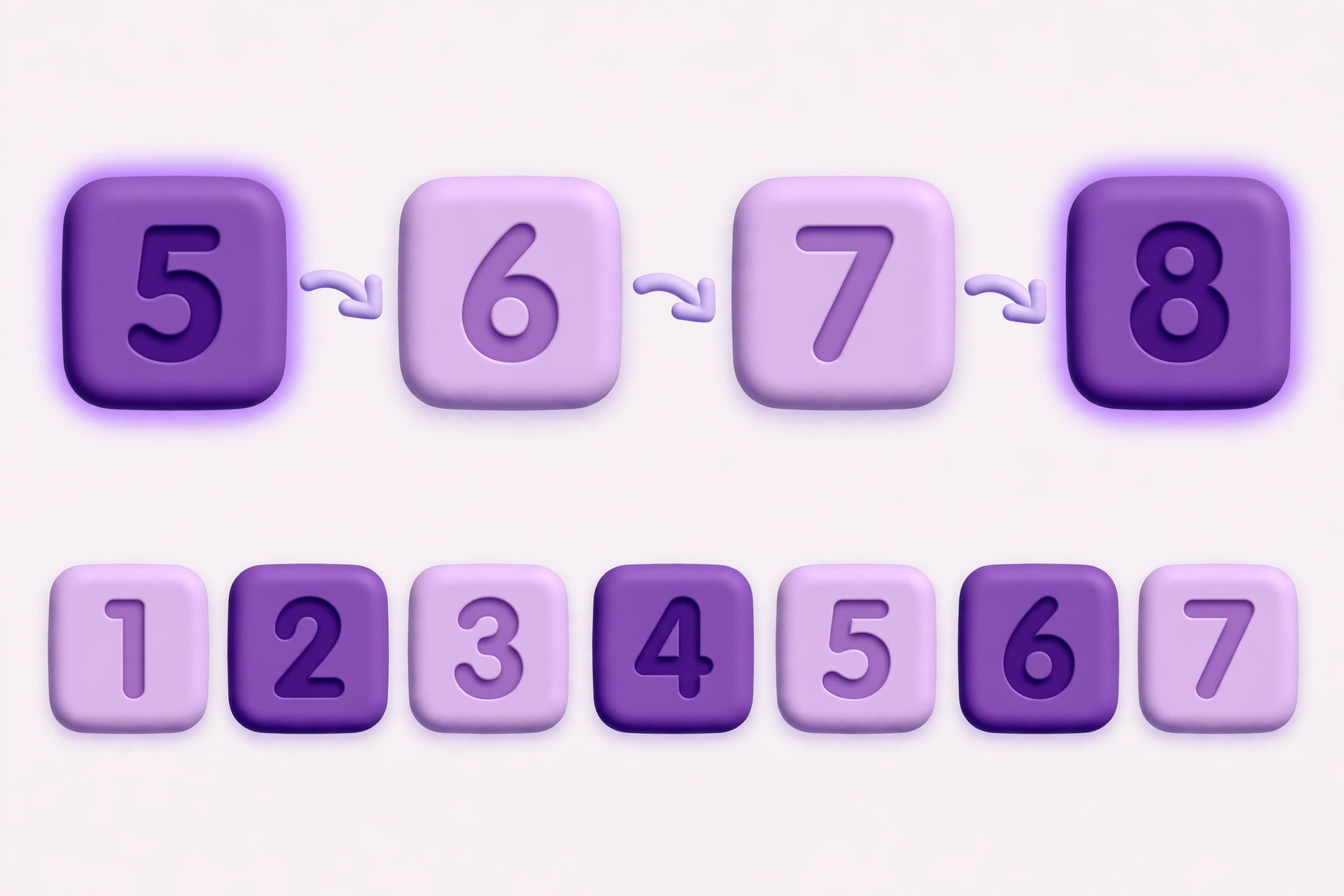
A picture makes it obvious. Think of dates as squares on a calendar and the gap as the steps between them. From 1 March to 10 March there are 9 steps but 10 squares. Most calculators, and most everyday uses, report the steps — the exclusive count.
Add one when the question is really “how many dates does this cover?” — a holiday counted by date, a course running on both the first and last day, or a booking that includes both endpoints.
Worked examples you can check on a calendar
Every example below uses the exclusive (gap) count first, with the inclusive count in brackets. Verify each one by counting forward on a calendar.
- A short trip, 10 June to 25 June 2026. Wednesday 10 June to Thursday 25 June is 25 − 10 = 15 days (16 inclusive), or 2 weeks and 1 day.
- A whole year, 1 January to 31 December 2026. Both dates fall on a Thursday, and 2026 is not a leap year. The gap is 364 days (365 inclusive) — exactly 52 weeks. The gap from the first to the last day of a year is always one less than the number of days in the year.
- The same February, leap year vs not. From 1 February to 1 March 2027 is 28 days — exactly 4 weeks — because February 2027 has 28 days. From 1 February to 1 March 2028 is 29 days — 4 weeks and 1 day — because February 2028 has 29 days. The dates look identical; the leap day makes the difference.
- A round three months, 15 January to 15 April 2026. Counted month by month, this is three calendar months, and in days it is 90 days — 12 weeks and 6 days. “Three months” is 90 days here only because of these particular months; a different three months gives a different day count.
Counting by hand across months and years
Inside one month, subtraction is enough. Across months, count forward one month at a time:
- Count the days left in the starting month, not counting the start date itself.
- Add each whole month in between, at its real length — January 31, February 28 or 29, March 31, April 30, and so on.
- Add the days in the final month up to the end date.
- Add one only if you need the inclusive count.
Check the three-month example: January has 16 days left after the 15th, February adds 28, March adds 31, April adds 15 — 16 + 28 + 31 + 15 = 90 days. Slow, but it never goes wrong, because it never assumes months are equal.
Leap years: the rule that changes your answer by a day
A leap year has 366 days instead of 365, with the extra day as 29 February. The full rule: a year is a leap year if it is divisible by 4, except that century years must also be divisible by 400 — so 2000 was a leap year, while 1900 was not. The next leap years after 2026 are 2028 and 2032.
The practical point is narrower: a leap year only changes your count if 29 February actually falls inside your range. A range from March 2028 to March 2029 crosses none, so it is unaffected; a range from January to March 2028 crosses one, so it is one day longer than the same range in a non-leap year. When a count looks one day out, check February first.
Weeks, months and years: why the months figure wobbles
The same gap can be described in several units, and they are not equally precise. Weeks are exact: divide the total days by 7 and keep the remainder. Months are calendar readings, not fixed lengths: a “month” between two dates means a whole calendar month, from the 15th of one month to the 15th of the next, so a one-month gap can be 28, 29, 30 or 31 days depending on the months crossed. Dividing by 30 is an approximation that is off whenever the real months differ — which is most of the time. Years work the same way: a calendar year from a date to the same date next year is 365 or 366 days depending on whether a 29 February falls inside it.
So when precision matters, quote the total day count. Two calculators can show different months for the same gap if one counts calendar months and the other divides by an average, while their day counts agree exactly. Trust the days.
Calendar days, weekdays and business days are three different counts
Everything so far has counted calendar days, weekends included. Two related counts answer different questions. Weekdays count only Monday to Friday, so a weekday count always depends on the actual dates, not just the gap’s length. Business days count weekdays minus public holidays — holidays vary by country and region, so a holiday inside your range still counts unless you subtract it yourself.
If your deadline is measured in working days, you need the business-day count, not the calendar gap. Our guide to what counts as a business day explains that counting, and the Business Days Calculator does it for you. For everything else — how long until the holiday, how long a project has run, how many days between two events — the calendar gap is the right figure, just as it underlies how exact age is worked out.
Five mistakes that throw the count off
- Counting both endpoints when you need the gap. The most common error: if your answer is exactly one more than a calculator’s, you almost certainly counted both endpoints.
- Treating every month as 30 days. A three-month gap is 89, 90, 91 or 92 days depending on the months — never divide by 30 for an exact answer.
- Forgetting 29 February. Any range crossing February in a leap year is one day longer; check the year, not just the month.
- Counting time of day instead of dates. A date difference counts whole calendar days. Starting late on one date and ending early two dates later is still a two-day gap in calendar terms, even though only a few hours passed.
- Assuming daylight saving changes the count. It does not, for calendar dates: clocks moving change the hours in a day, not the number of dates between two dates.
Count it in seconds with the Date Difference Calculator
For any pair of dates, the fastest reliable check is the free Date Difference Calculator. Pick the start date, pick the end date, and read the difference in days, weeks, months and years. It reports the elapsed difference — the gap count from this article — so if your purpose needs both endpoints counted, add one day to its total, as its own guidance says. Its months-and-years breakdown is a calendar reading; when precision matters, quote the total days figure, which is exact.
For more date tools in the same place, browse the Date & Time Tools category or see everything on All Tools.
Frequently asked questions
How many days are there between the same date twice?
Zero, on the gap count: no days have passed. On the inclusive count, one, because one date is covered.
What if the end date is before the start date?
The gap is the same size, measured backwards. Some tools show it as a negative number. Put the earlier date first to keep the result positive.
Do weekends count in days between two dates?
Yes, for calendar days — weekends are days on the calendar. If you need weekdays or working days only, use a weekday or business-day count instead.
Why do two calculators disagree by exactly one day?
Almost always, one counts inclusively and the other exclusively; the inclusive one is exactly one higher.
Further reading (verified external sources): the hand-counting method and the inclusive/exclusive trade-off are set out in DatesCalculator’s guide to calculating days between dates by hand, and the exclusive and inclusive formulas with examples are set out in Calculator6’s days-between-dates formula guide.
Pingback: What Is a Unix Timestamp? Epoch Time Explained Simply