

Morse code looks like decoration until someone explains it: a scattering of dots and dashes that somehow carries real words. Once you know the handful of rules behind it, the whole chart starts to make sense — and you can read short messages without memorising 36 separate symbols one by one.
This guide gives you the complete Morse code alphabet chart, explains the timing rules that hold it together, and walks through a real example so you can decode a message yourself. At the end, you can try encoding your own words with a free tool — with an honest note about what that tool can and cannot do.
What the Morse code alphabet is
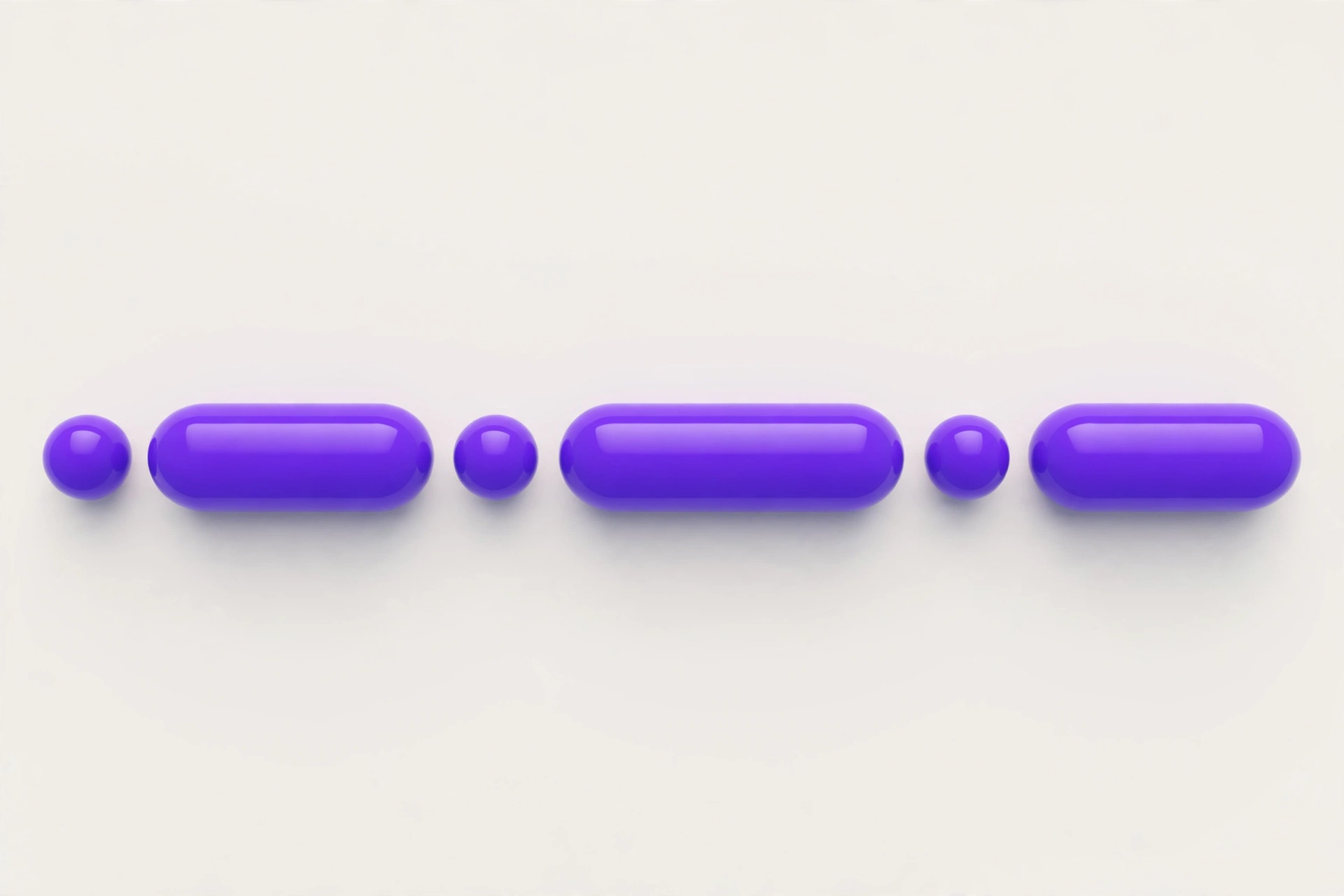
Morse code is a way of writing text as a sequence of two signals: a short signal called a dot (spoken as “dit”) and a long signal called a dash (spoken as “dah”). Every letter, digit and common punctuation mark has its own fixed pattern of dots and dashes. String the patterns together, with the right gaps between them, and you have a message that can be sent as sound, light, taps or electrical pulses.
It was developed in the 1830s by Samuel Morse and Alfred Vail for the electric telegraph, when sending a message over a wire meant switching a current on and off. The version used today is International Morse code, standardised for radio communication around the world. It is not the same as the older American Morse code used by early landline telegraph operators, which gave some characters different patterns.
One point worth clearing up early: Morse code is not a language, and it is not a secret code. It is an encoding — a way of representing ordinary letters in another form. Anyone who knows the chart can read a Morse message, just as anyone who knows the Base64 alphabet can decode a Base64 string. If you want that distinction explained for another encoding, our guide to what Base64 encoding is covers it in more detail.
How it works: dots, dashes and the silences between them
Most charts show you the dots and dashes and stop there. That leaves out half the system, because the silences are doing just as much work as the signals. A dash is not a louder dot. It is the same signal held three times as long. And the gaps between signals tell the reader where one letter ends and the next begins.
Everything is measured in units, where one unit is the length of a single dot. These ratios follow the international standard ITU-R M.1677, as set out in this Morse code alphabet reference:
| Element | Length |
|---|---|
| Dot (dit) | 1 unit |
| Dash (dah) | 3 units |
| Gap inside a character (between its dots and dashes) | 1 unit |
| Gap between characters | 3 units |
| Gap between words | 7 units |
In written Morse code, a space usually separates characters and a slash (/) separates words, which mirrors those gaps on the page.
This is why timing matters more than speed. A three-unit gap and a three-unit dash are the same length, so if your gaps drift, letters bleed into each other. Send .- -. with sloppy spacing and it can sound like .–. — the difference between “AN” and “P” is nothing but where the silence falls. Beginners who rush usually do not have a dot-and-dash problem; they have a gap problem.
There is also a design logic to the chart itself. The people who built the code counted how often letters appear in English and gave the most frequent ones the shortest patterns. E, the most common letter, is a single dot. T is a single dash. The letters you use least, like Q and J, get the longest four-element patterns.
The complete Morse code alphabet chart (A–Z)
Here is the full chart. Read each row left to right as the signal pattern for that letter. Use it as a reference while you practise; the learning tips near the end of this article work better than memorising the table in alphabetical order.
| Letter | Morse code | Letter | Morse code |
|---|---|---|---|
| A | .- | N | -. |
| B | -… | O | — |
| C | -.-. | P | .–. |
| D | -.. | Q | –.- |
| E | . | R | .-. |
| F | ..-. | S | … |
| G | –. | T | – |
| H | …. | U | ..- |
| I | .. | V | …- |
| J | .— | W | .– |
| K | -.- | X | -..- |
| L | .-.. | Y | -.– |
| M | — | Z | –.. |
Numbers 0–9
Digits follow a pattern of their own, and it is the easiest part of the chart to learn. Every digit uses exactly five signals — nothing else in the standard alphabet runs to five — so a five-element group is always a number.
| Number | Morse code | Number | Morse code |
|---|---|---|---|
| 0 | —– | 5 | ….. |
| 1 | .—- | 6 | -…. |
| 2 | ..— | 7 | –… |
| 3 | …– | 8 | —.. |
| 4 | ….- | 9 | —-. |
The pattern is tidy: 1 to 5 start with an increasing number of dots followed by dashes, 5 is all dots, and 6 to 9 flip the arrangement. Learn 5 (…..) and 0 (—–) first, and the rest fall into place around them.
Common punctuation
Punctuation marks have Morse patterns too, though most everyday messages use only a few of them. These are the common ones:
| Mark | Morse code | Mark | Morse code |
|---|---|---|---|
| Full stop (.) | .-.-.- | Ampersand (&) | .-… |
| Comma (,) | –..– | Colon (:) | —… |
| Question mark (?) | ..–.. | Semicolon (;) | -.-.-. |
| Apostrophe (‘) | .—-. | Equals sign (=) | -…- |
| Exclamation mark (!) | -.-.– | Plus sign (+) | .-.-. |
| Slash (/) | -..-. | Hyphen (-) | -….- |
| Opening parenthesis ( | -.–. | Underscore (_) | ..–.- |
| Closing parenthesis ) | -.–.- | Quotation mark (“) | .-..-. |
| Dollar sign ($) | …-..- | At sign (@) | .–.-. |
You do not need to learn these before you can read ordinary words. Learn the full stop, comma and question mark, and look the rest up as you need them.
How to read a message: a worked example
Let us decode a short word together. Here is HELLO in Morse code, with the letter gaps shown as spaces:
…. . .-.. .-.. —
Take it one group at a time, using the chart above:
- …. — four dots — is H.
- . — a single dot — is E.
- .-.. — dot, dash, dot, dot — is L.
- .-.. — the same again — L.
- — — three dashes — is O.
Put together: H-E-L-L-O. Notice how the double L is just the same pattern twice, and how the whole word is readable once you split it into groups. That splitting is exactly what the gap rules are for.
Now the most famous Morse signal of all: SOS is … — … — S, O, S. It is not an abbreviation for anything; it was chosen because the pattern is simple and unmistakable. In distress signalling it is sent as one continuous procedural signal, without the normal spacing between letters.
Try decoding one yourself before reading on: …. .. is two letters — four dots, then two dots. That is H, then I. “HI” is a good first word to send someone when you are practising.
Mistakes that trip up beginners
Most beginner errors come from the same few misunderstandings, and all of them are easy to fix once you spot them.
Treating a dash as louder rather than longer. A dash is a dot held for three units. If you tap harder instead of longer, the listener hears two different volumes and no usable timing.
Ignoring the gaps. As shown above, a missing or stretched gap merges two letters into a different one. Practise the silences deliberately: one beat inside a letter, three beats between letters, seven between words.
Learning by shape instead of sound. A chart is a reference, not a learning method. Operators learn each letter as a rhythm — “di-dah” for A, “dah-di-dit” for D — so the pattern arrives as one sound rather than a sequence to count.
Assuming every symbol has a code. Morse covers letters, digits and common punctuation. Accented letters and many symbols do not have standard patterns, so encoders either skip them or need a workaround. Check the output before you copy it anywhere important.
Thinking Morse is secret or secure. It is not. It is an encoding, and anyone with the chart can read it. Never use it to “hide” a password or a private message.
A faster way to learn it
You do not need to learn the alphabet in order. Start with the shortest letters — E, T, I, M, S, O — and practise them until each one feels like a single rhythm. Then add A, N, D and U, which build on the patterns you already know. Learn the numbers as a group, using the five-element pattern described above, and leave punctuation until last.
Practise in both directions: read written Morse into letters, and turn short words into Morse. Short, familiar words work best — your name, “HI”, “SOS”, “HELLO” — because you already know what the answer should be, so mistakes are obvious. A few minutes a day beats one long session, because the skill is rhythm recognition, and rhythm sticks with repetition, not cramming.
If you want to check your encoding as you practise, try the free Text to Morse Code tool on this site: type your message, run it, and copy the result. Two honest limits: it produces written Morse code as text — it does not play the signals as sound — and characters outside letters, digits and common punctuation are skipped, so check the result if your message contains unusual symbols. The companion Morse Code to Text tool decodes the same layout back into readable text. You can also browse the Text & Writing tools or all free tools.
FAQ
Is Morse code a language?
No. It is a character encoding: a way of representing letters, numbers and punctuation as timed signals. The message itself is still in whatever language it was written in — usually English, but it could be anything that uses the same letters.
How long is a dash compared to a dot?
A dash lasts three times as long as a dot. A dot is one time unit, a dash is three, the gap inside a letter is one unit, the gap between letters is three units, and the gap between words is seven units.
What does SOS stand for?
Nothing — it is not an abbreviation. It was chosen because … — … is simple, distinctive and hard to mistake for anything else. It is sent as one continuous signal in distress use, rather than as three spaced letters.
Is Morse code still used today?
It survives in amateur radio, where it is known as CW (continuous wave), and it still appears in puzzles, films, escape rooms and classrooms. You are unlikely to need it for daily communication, but it remains a living skill rather than a museum piece.
Can the Text to Morse Code tool play the code as sound?
No. It produces written Morse code as text on the page. If you want to practise by ear, read the patterns aloud as “dit” and “dah” rhythms, or use the chart above to sound them out yourself.
Morse code rewards a small amount of patience: learn the timing rules, learn the shortest letters by sound, and keep the chart nearby for everything else. The chart will not stay a reference for long — after a few days of short practice, the common letters start arriving as rhythms, and that is when the dots and dashes stop looking like decoration.
Pingback: ASCII Codes vs ASCII Art: The Difference Explained